Sex-specific evidence
Analyses and recommendations draw on research in women first, and flag where evidence in women is limited

WOMEN'S HEALTH
Clinical decision support that looks at the whole picture, connecting body systems, by interpreting each patient's labs, symptoms and wearable data in the context of her life stage
Four capabilities that support individualized treatment through the menopause transition and beyond.
Analyses and recommendations draw on research in women first, and flag where evidence in women is limited
Patients log vasomotor symptoms, sleep, mood, cognition and bleeding daily, alongside validated instruments
See how symptoms trend after each change in formulation, dose or route, between visits rather than waiting until the next one.
Hormone and non-hormone therapies, lifestyle and supplements, each with its evidence grade, each with supporting research and expected effects.
Women remain underrepresented in many of the trials that inform prescribing, and most drug doses are not sex-specific. Longevitix draws on a curated women’s health knowledge base, prioritizes data from female populations, and links every recommendation to its sources.
01
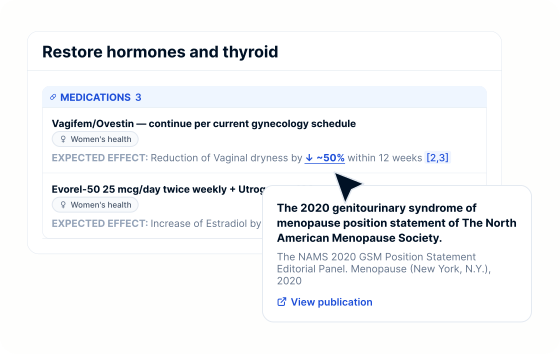
Most clinical decision support draws on sex-pooled trial data. Here, findings specific to women appear where the prescribing choice is made, such as the lower VTE risk of transdermal versus oral estrogen and the undertreatment of women with statins.
02
Bone, muscle, sleep, lipids and vasomotor symptoms sit in one plan, treating menopause as a multi-system transition.
03
Each option carries a High, Moderate or Low grade, so a guideline-backed therapy and an emerging supplement never carry equal weight.
Longevitix reviews the patient's entire health, including domains specific to women, such as hormones and cycles, bone health and pelvic health. Results are read in the context of her life stage and connected across systems: declining estrogen, for example, is read alongside sleep, mood, bone density and ApoB.
READ IN THE CONTEXT OF LIFE
News
Read more on Longevity.Technology
Blog post
Read more
Blog post
Read more
A curated knowledge base that prioritizes research in female populations, alongside current guidance from society guidelines. Each recommendation cites its sources and evidence grade.
Patient-reported symptoms, sleep, mood and cycle, shown alongside labs and wearable data.
It presents hormone and non-hormone therapy options with supporting research and expected effects, then tracks symptoms and response after each adjustment. The physician makes every decision.
No. Life stage is captured at intake and informs all clinical domains.