Back
Women’s Health and Hormone Therapy After the 2026 Labels

Dr. Neil Panchal
Co-founder and Chief Medical Officer
Share:

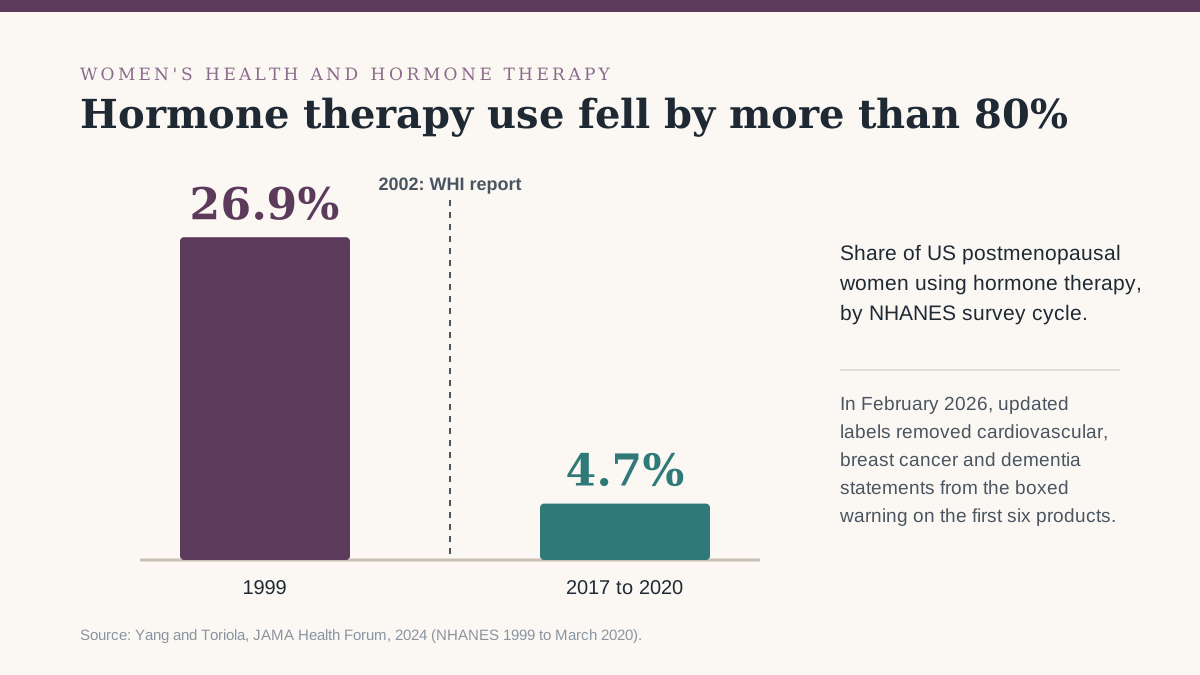
On February 12, 2026, the FDA approved updated labels for the first six menopause hormone therapy products. Statements on cardiovascular disease, breast cancer and probable dementia came out of the boxed warning. Twenty-nine manufacturers have submitted similar label changes.
For more than twenty years, that warning shaped women’s health hormone therapy decisions, and how often physicians prescribed at all. The label now reflects the evidence. Practice will take longer to follow, because most of us trained when hormone therapy was something to avoid.
This article covers how we got here, what the new labels cover, and what to weigh for each patient.
How the Women’s Health Initiative changed prescribing
In 2002, the Women’s Health Initiative stopped its estrogen-plus-progestin arm early after finding higher rates of breast cancer and cardiovascular events. The headlines applied that result to every woman in menopause.
The trial population was narrower than the headlines. Participants averaged 63 years old at enrollment, many were more than a decade past their final menstrual period, and all took oral conjugated equine estrogen with medroxyprogesterone acetate.
Prescribing collapsed anyway. Systemic hormone therapy use among US postmenopausal women fell from roughly one in four around 2001 to a few percent by 2020.
Later analyses split the WHI data by age and time since menopause. Absolute risks for women aged 50 to 59 were low, and over 18 years of cumulative follow-up, hormone therapy was not associated with higher all-cause, cardiovascular or cancer mortality (Manson et al., JAMA 2017). The Menopause Society’s 2022 position statement concludes that for women under 60, or within 10 years of their final period, without contraindications, the benefit-risk profile is favorable for treating vasomotor symptoms and preventing bone loss (NAMS, 2022).
A training gap that outlasted the evidence
A 2019 survey of family medicine, internal medicine and OB/GYN residents found that about one in five had received no menopause education, and only about 7% felt adequately prepared to manage menopause (Kling et al., Mayo Clinic Proceedings, 2019).
That gap shows up in clinic. Perimenopausal symptoms are often attributed to anxiety, depression or thyroid disease first, which we covered in why nearly four in ten women report a perimenopause misdiagnosis.
What the 2026 hormone therapy label changes cover
The first six products span all four categories of menopause hormone therapy: estrogen plus progestogen, estrogen alone, progestogen alone for women with a uterus who use estrogen, and vaginal estrogen.
For these products, the boxed warning no longer lists cardiovascular disease, breast cancer or probable dementia. The boxed warning for endometrial cancer remains on systemic estrogen-alone products for women with a uterus. More label updates are expected as the remaining submissions are reviewed.
A label change widens permission. Each patient still needs her own risk assessment.
Route and formulation change the risk
Route of administration is one of the clearest levers we have.
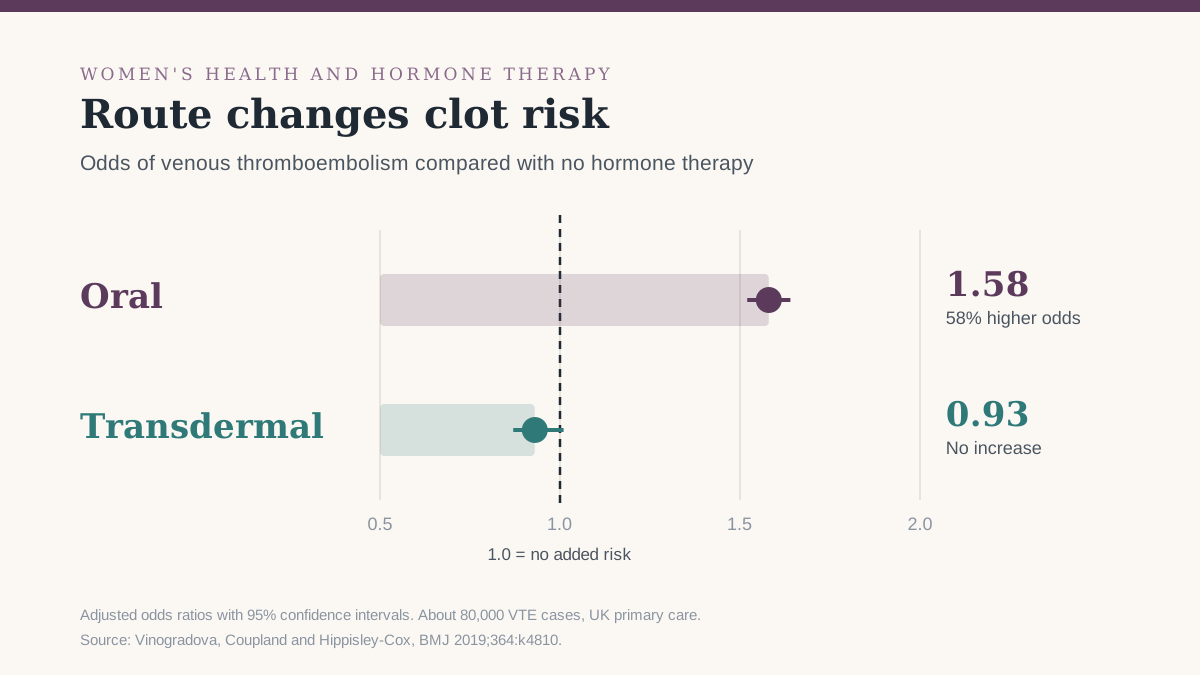
In a UK study of about 80,000 venous thromboembolism cases, oral hormone therapy raised VTE risk (adjusted odds ratio 1.58), while transdermal preparations showed no increase (odds ratio 0.93) (Vinogradova et al., BMJ 2019). The progestogen matters too. Transdermal estradiol combined with micronized progesterone did not change a key clotting marker, activated protein C resistance, while norpregnane progestogens did (Canonico et al., Menopause 2010).
Lipids shift by route as well. Long-term WHI biomarker follow-up found hormone therapy lowered LDL cholesterol, lipoprotein(a) and insulin resistance, raised HDL, and raised triglycerides with oral estrogen (WHI biomarker analysis, 2025). Lipid effects are one input among several. Hormone therapy has no indication for lipid lowering on its own.
Timing still matters
The timing hypothesis holds up in newer data. Women who start hormone therapy within 10 years of menopause show cardiovascular benefit in several analyses, while women starting 20 or more years after menopause, or after age 70, carry higher coronary risk.
Early menopause (before 45) and premature menopause (before 40) raise cardiovascular risk on their own. For women with premature ovarian insufficiency, guidelines support hormone therapy at least until the average age of natural menopause.
A women’s health hormone therapy checklist
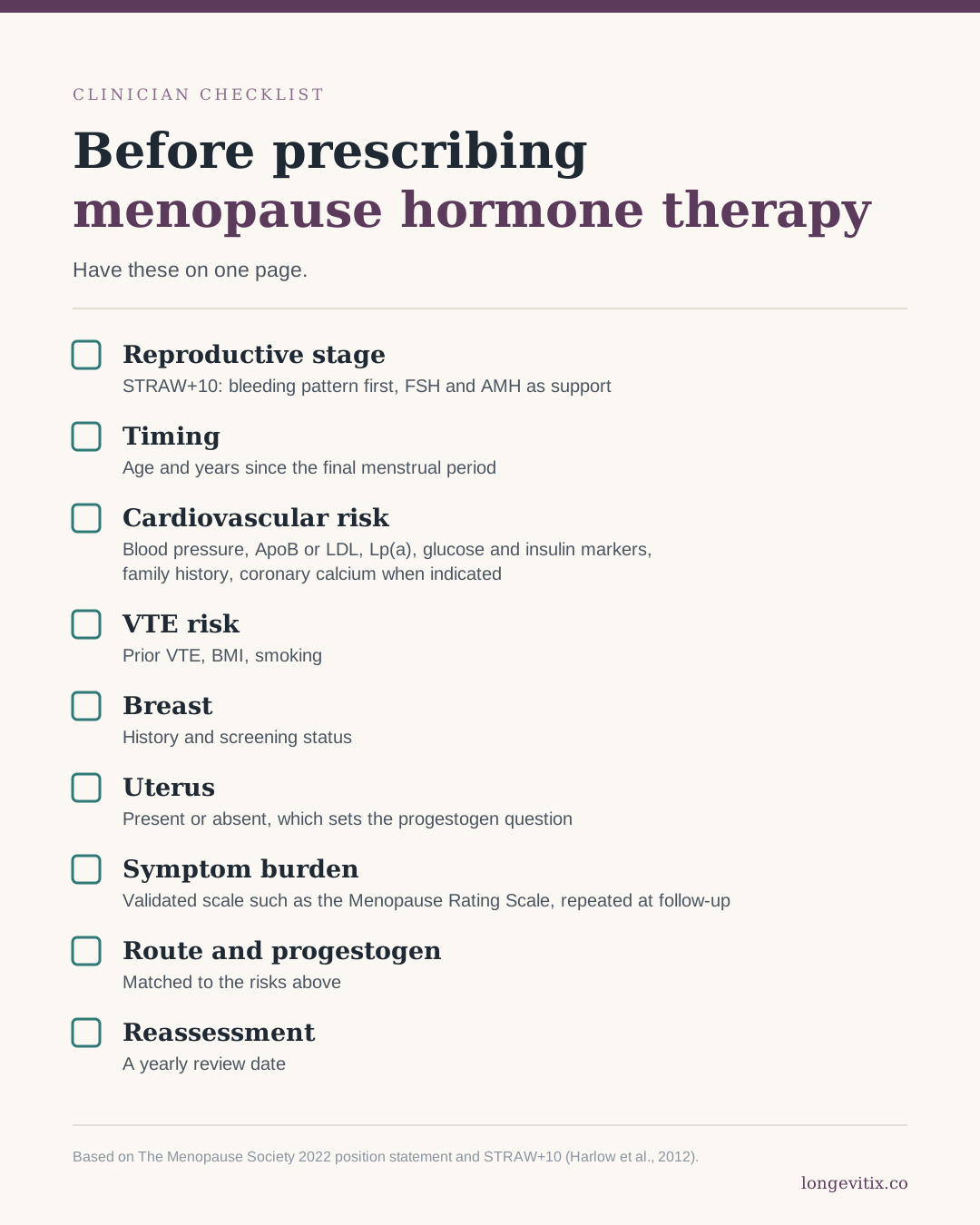
Before prescribing menopause hormone therapy, it helps to have these on one page:
- Reproductive stage, using STRAW+10 criteria (bleeding pattern first, FSH and AMH as support)
- Age and years since the final menstrual period
- Cardiovascular risk: blood pressure, ApoB or LDL, Lp(a), glucose and insulin markers, family history, and coronary calcium when indicated
- VTE history and risk factors, including BMI and smoking
- Breast history and screening status
- Uterus present or absent, which sets the progestogen question
- Symptom burden on a validated scale such as the Menopause Rating Scale, repeated at follow-up
- Route and progestogen choice, matched to the risks above
- A yearly reassessment date
For the lab side of that list, see our guide to building a first panel for midlife women.
FAQs
Did the 2026 changes remove every boxed warning on hormone therapy?
No. The endometrial cancer warning remains on systemic estrogen-alone products for women with a uterus.
Can women continue hormone therapy after 60?
The Menopause Society does not set an automatic stop age. Continuing after 60 or 65 can be appropriate with yearly reassessment of symptoms, risks and goals.
When should I choose transdermal over oral estradiol?
Consider transdermal for women with elevated VTE risk, high triglycerides, or obesity. Observational data shows no increase in VTE risk with transdermal routes.
Should hormone therapy be started to prevent dementia?
Current evidence does not support starting hormone therapy for dementia prevention. Our review of dementia risk in women covers what the newer data shows.