Back
BackBeyond Biomarkers: The Evolution from Diagnostic to Predictive Medicine

Dr. Neil Panchal
Co-founder and Chief Medical Officer
Share:
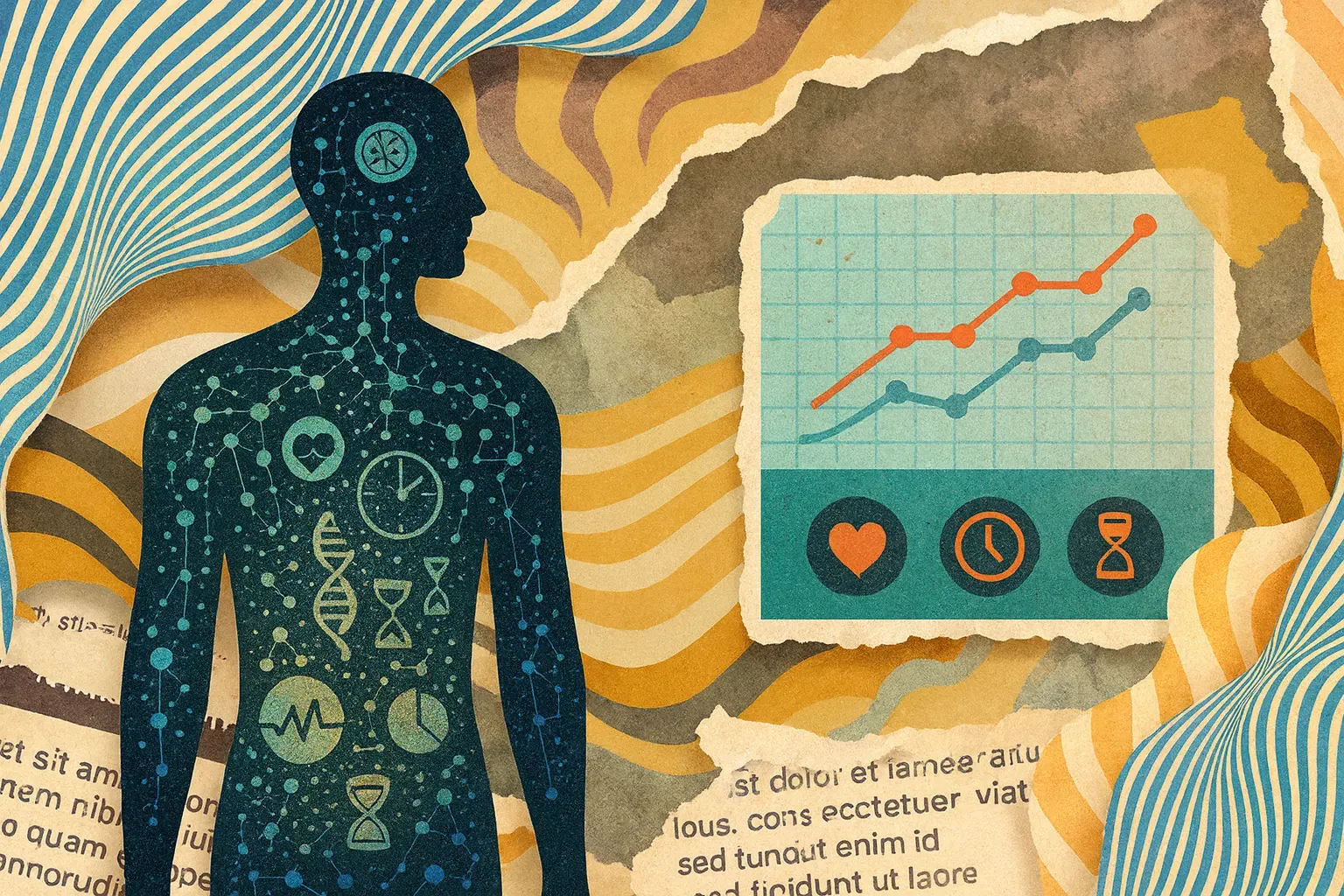
We’ve built modern medicine on snapshots. A patient walks into your clinic, you order labs, interpret the results against reference ranges, and make clinical decisions based on that single moment in time. But the truth is, we don’t age in blood draws. We age in patterns, in trajectories, in the subtle drift of biomarkers that tell a story only visible when you connect the dots across time.
Asking better questions to better understand the big picture, or in other words, the shift from diagnostic to predictive medicine, represents a fundamental reimagining of preventive care in an era where longitudinal health data can reveal dysfunction years before it becomes disease.
Root-cause medicine has always required looking beneath surface symptoms to understand systemic patterns, but now we can measure, track, and visualize those patterns with unprecedented precision. This operationalizes that shift with a clinic-ready cadence for measuring what matters, turning multi-visit noise into signal. It’s the practical bridge from diagnostic to predictive medicine: fewer surprises, earlier pivots, and outcomes that compound over time.
The Limitation of Single Timepoint Testing in the Precision Era
Static Lab Results: A Broken Snapshot
Here’s a scenario you’re all familiar with: a patient comes in for their annual physical. Labs come back within normal limits. Everyone moves on. Six months later, that same patient is diagnosed with a condition that was subclinical but actively progressing during that “normal” visit.
What happened? That single blood draw captured one moment in a dynamic, fluctuating biological system. Fasting glucose was 94 mg/dL – officially normal. But you didn’t see it climbing steadily from 82 over three years. You didn’t see post-prandial spikes to 165. You didn’t see fasting insulin rising from 4 to 12 μIU/mL as insulin resistance silently progressed.
Single timepoint testing creates dangerous illusions: false reassurance when values sit just inside reference ranges but trend toward pathology, and false alarms when values spike temporarily due to acute stressors.
Why One Lab Draw Misses the Forest for the Trees
Single-point data tells you where the patient is, not where they’re going. This distinction is everything in preventive medicine.
You need longitudinal health data to understand trajectory. Is this patient’s inflammatory profile stable or escalating? Is metabolic health deteriorating or maintaining? Are cardiovascular markers improving with intervention or resistant to change?
Clinical in Action: A 42-year-old woman presented with “unexplained” fatigue. Her PCP ran standard labs all normal. TSH 2.1, ferritin 45, vitamin D 32. No diagnosis, no plan. When we pulled historical data going back three years, a pattern emerged: TSH climbed from 1.2 to 2.1, ferritin declined from 78 to 45, vitamin D dropped from 52 to 32, and reverse T3 was elevated. Each value individually “normal,” but the trajectory screamed thyroid dysfunction and progressive nutrient depletion. Within six months of addressing the pattern (and not individual values) her energy normalized.
The pattern contains the prediction. An hsCRP of 2.5 mg/L could mean stable inflammation, resolving infection, or early inflammatory acceleration. Without context from previous measurements, you’re interpreting noise, not signal.
Longitudinal Data: The Gateway to Predictive, Pattern-Based Care
Tracking the Trajectory, Not the Dot
Predictive medicine requires a fundamental shift: seeing each patient as a continuous, evolving dataset where relationships between measurements across time reveal more than any individual value.
This is medicine 3.0. We’re not replacing systems thinking, but rather quantifying it. When you track inflammatory mediators, nutrient patterns, and recovery metrics over time, you’re translating systems biology into visible trajectories both clinician and patient can act upon.
The trajectory tells you velocity and direction. A patient whose HbA1c held steady at 5.2% for five years is metabolically different from one whose HbA1c climbed from 4.8% to 5.2% over the same period, despite identical current values. Your clinical recommendations should reflect that distinction.
Pattern Recognition in Multi-Modal Diagnostic Streams
Real power emerges when you integrate multiple data streams labs, biometrics, wearables, patient-reported outcomes, metabolomics, microbiome sequencing into a coherent narrative. This is multi-modal diagnostics: synthesizing diverse data types to identify patterns that single modalities often miss.
Consider a patient with fatigue. Standard labs: normal TSH, CBC, CMP. Diagnosis unclear.
But look at the multi-modal picture:
- Wearable data: HRV declining from 65ms to 42ms over six months
- Sleep tracking: Progressive fragmentation, decreasing deep sleep
- Labs trending: hsCRP climbing from 0.8 to 2.2 mg/L, fasting insulin from 6 to 10
- Metabolomics: Declining NAD+ precursors, rising oxidative stress markers
- Microbiome: Decreasing diversity
- Subjective: Energy ratings declining despite unchanged sleep duration
Now fatigue has a story: subclinical dysfunction across metabolic, inflammatory, and mitochondrial systems. This is the forest that single trees obscure and precisely the systems-level thinking medical clinicians excel at with the right data architecture.
Clinical in Action: A 45-year-old tech executive wanted to “optimize performance.” Baseline: chronological age 45, biological age 52 (DNAm PhenoAge). Protocol: sleep extension to 7.5 hours, time-restricted feeding (16:8), zone 2 training guided by HRV, stress management, targeted nutrient repletion. Eighteen months later: HRV improved from 45ms to 68ms, inflammation markers improved, fasting insulin dropped from 11 to 5. Most important: Patient’s energy is rejuvenated.
From Data to Diagnosis: The Future Clinic
Imagine a clinic where your entire health history including every lab, biometric, intervention, outcome, lives in dynamic visualization showing trajectories. The clinician asks “What patterns are emerging, and where do they lead if uncorrected?”
This is the logical endpoint of longitudinal data integration. The clinical encounter transforms from detective “data” work to collaborative trajectory analysis. The patient and the clinician examine the data landscape together, identify concerning trends, and design interventions targeted at inflection points before they become crises.
Aggregate longitudinal data across populations reveals phenotypes and progression patterns invisible in cross-sectional studies. Which patients respond to specific interventions? What early markers predict later outcomes? These insights feed back into clinical practice, continuously refining precision medicine.
The Patient Experience: From Passive Recipient to Active Partner
Perhaps the most profound shift longitudinal medicine enables isn’t clinical, but rather relational. When you show a patient their health as a trajectory rather than a snapshot, everything changes.
Conventional model: “Your cholesterol is 215. That’s high. Here’s a statin.” The patient feels labeled, reduced to a number, often resistant because they feel fine.
Trajectory model: “Here’s your lipid panel over four years. LDL went from 110 to 185. Your ApoB particle count increased 40%. Fasting insulin climbed, HDL dropped. You’re on a trajectory toward cardiovascular disease, but we can see when this started and what’s driving it. Let’s address root causes, not just suppress symptoms.”
The patient sees themselves in the data. The trajectory isn’t hypothetical, it’s already in motion. They become collaborators in course correction rather than reluctant medication-takers.
The transformation we see clinically:
- Adherence improves when patients understand “why now” not just “what to do”
- Motivation sustains when they track their impact on their own biomarkers
- Trust deepens when clinicians demonstrate intervention effectiveness through measurable changes
- Patient churn rate drops leading to higher retention rates and adherence over time
- Anxiety decreases paradoxically trending data with an action plan creates control
The Integrative Medicine Advantage: Systems Thinking Meets Predictive Data
Functional Medicine practitioners have always approached health through a systems lens – understanding the body as interconnected networks where dysfunction in one system cascades through others. Predictive medicine doesn’t replace this model; it quantifies and validates it.
When you track nutrient status over time, you’re measuring enzymatic cofactors driving methylation, mitochondrial function, neurotransmitter synthesis, and detoxification. When inflammation markers trend upward, you’re seeing the common pathway through which gut dysfunction, metabolic dysregulation, and chronic stress manifest as systemic disease risk.
Root-cause diagnostics become trajectory-guided interventions:
- Microbiome diversity declining → preemptive gut restoration before inflammatory markers elevate
- Methylation markers shifting → nutrient repletion before homocysteine crosses thresholds
- Mitochondrial function decreasing → metabolic support before debilitating fatigue
- HPA axis dysregulation appearing → stress management before burnout manifests
This is where functional root cause medicine’s strength in addressing upstream causes meets predictive medicine’s ability to identify those causes before they create downstream disease.
The Philosophical Shift: From Reactive to Proactive
The evolution from diagnostic to predictive medicine represents a fundamental philosophical reorientation functional medicine practitioners intuitively understand but can now measure and validate.
Traditional medicine asks: “What disease does this patient have, and how do we treat it?”
Predictive medicine asks: “What trajectory is this patient on, and how do we alter it before disease manifests?”
The first is reactive; the second is proactive. The first treats the body as parts; the second as an integrated system evolving through time.
The Relief of Early Detection:
When you catch dysfunction early such as rising inflammatory markers and declining metabolic flexibility at 45, before diabetes is diagnosed , before cardiac events occur, patients experience medicine as protective, proactive, empowering. You’re delivering a warning with a roadmap. Interventions at this stage are lifestyle-based, lower-risk, and more effective than pharmaceutical management of established disease.
The Transformation of the Therapeutic Relationship:
Predictive medicine fundamentally changes the doctor-patient dynamic. You’re the guide helping the patient navigate their biological terrain, showing them the map, collaborating on the route forward.
This partnership model where data is shared transparently, decisions are made collaboratively, outcomes tracked together, creates a therapeutic alliance built on trust, transparency, and shared commitment to optimization rather than merely disease avoidance.
Practical Next Steps for Clinicians
Ready to implement longitudinal, predictive care? Here’s your roadmap:
- Start Simple Build Systematically
- Choose 3 biomarkers to trend with every patient (fasting insulin, hsCRP, ApoB)
- Test at consistent intervals (quarterly for optimization, semi-annually for maintenance)
- Add One Wearable Metric
- HRV correlates with stress resilience, autonomic health, and recovery
- CGMs for anyone with metabolic concerns
- Sleep trackers for objective assessment
- Establish Biological Age Baselines
- Test baseline, then annually
- Use as your “outcome metric” for healthspan optimization
- Document Patterns, Not Just Values
- Describe trajectories: “Fasting insulin rising from 6→8→10 over 18 months”
- Creates clinical reasoning record
- Build Your Evidence Base
- Track which interventions worked, for whom
- Share de-identified cases with colleagues
- Contribute to trajectory-based care evidence
The Future Is Already Here It’s Just Not Evenly Distributed
The tools for predictive, longitudinal medicine exist today. The biological age clocks, multi-modal diagnostic platforms, wearable sensors, data visualization systems they’re here. What’s evolving is the clinical mindset and practice models that make this approach sustainable.
For longevity, integrative, and functional medicine practitioners, this is your moment. You’ve been doing systems-based, root-cause medicine while waiting for healthcare to catch up. Now the technology and evidence base are arriving to validate what you’ve known: health is dynamic, patterns matter more than single points, and early intervention on subclinical dysfunction prevents disease better than late intervention on established pathology.
The question isn’t whether this is the future of medicine. The question is: Will you help build it?
Your patients are already generating longitudinal data from wearables, home testing, repeated visits. The only question is whether that data gets synthesized into actionable intelligence or sits fragmented across disconnected platforms.
Build a practice that treats patients as moving graphs, not data points. Track trajectories, not just values. Intervene on patterns, not just pathology. Recognize that the most powerful intervention isn’t a drug or supplement, it’s helping a patient see their own trajectory and empowering them to change it.
This is longevity medicine at its core: extending not just lifespan but healthspan by identifying and intervening on declining trajectories before they manifest as disease. Technology enables it. The data supports it. The patients want it.
The practitioners who embrace it now will define how medicine is practiced tomorrow. For a hypothetical patient who has a fasting glucose of 94, they may feel fine. Show them a graph where 94 is the latest point in a three-year upward trend from 82, and suddenly they understand the trajectory toward diabetes isn’t theoretical. Data visualization transforms abstract risk into concrete reality.
The moving graph metaphor also captures something essential about aging and health optimization: they’re processes, not states. You can’t “achieve” health and maintain it passively. You’re either trending toward improvement or deteriorating. The goal is to flatten or reverse the decline curves while extending the vitality curves but you can only do that if you can see them.
Frequently Asked Questions
What’s the minimum data history needed to identify a clinically meaningful trend?
Generally, three data points over 6-12 months establish an initial trend, but confidence increases with more data. A marker moving consistently in one direction across three measurements suggests a real trajectory rather than random variation. However, context matters enormously. A fasting glucose rising from 85 to 92 to 98 over 18 months is clinically significant even with just three points. An hsCRP bouncing between 1.2, 2.8, and 1.5 over the same period lacks a clear trend and requires more data or investigation into acute factors. The best practice: establish a baseline with 2-3 measurements, then track at intervals appropriate to the marker’s biology and the patient’s risk profile.
How do you distinguish between normal biological variation and a concerning trend?
This is where clinical judgment meets data literacy. Normal variation occurs within a range fasting glucose might fluctuate between 82-88 in a metabolically healthy individual. Concerning trends show directional movement outside historical ranges or consistent drift toward pathological thresholds. Statistical tools like calculating the coefficient of variation help quantify this, but clinical context is essential. Ask: Is the variation bidirectional (fluctuating around a stable mean) or unidirectional (consistently moving in one direction)? Are multiple related markers moving together (insulin + glucose + HbA1c all trending up)? Does the timing correlate with life changes (new medication, stress period, dietary shift)? Pattern recognition across multiple markers provides more reliable signals than any single value.
Isn’t this approach only feasible for concierge or cash-pay practices?
Currently, yes the time required for comprehensive data review and longitudinal analysis doesn’t fit traditional fee-for-service constraints. However, we’re seeing creative adaptations: DPC practices building longitudinal care into membership models, functional medicine practices using health coaching teams to support data tracking between physician visits, and tech-enabled platforms that handle initial pattern recognition to streamline physician review time. As evidence accumulates showing improved outcomes and reduced long-term costs, payment models will adapt. Medicare already reimburses for Chronic Care Management, recognizing that ongoing monitoring beats episodic intervention. Expect similar evolution for preventive longitudinal care as the ROI becomes undeniable.
What if a patient’s trajectory looks concerning but all values remain “normal”?
This is precisely where predictive medicine diverges from diagnostic medicine and where the most impactful interventions happen. A patient with metabolic markers trending toward dysfunction while still in “normal” ranges is the ideal candidate for prevention. The clinical conversation shifts: “Your labs are technically normal, but I’m concerned about the direction they’re heading. If this trajectory continues, you’ll cross into prediabetes within 18-24 months. We have an opportunity now to reverse this trend before it becomes a diagnosis.” Many patients respond powerfully to this framing because it’s concrete, visual, and empowering. You’re not treating a disease; you’re changing a trajectory. Document the trend, explain the rationale, and intervene based on trajectory risk rather than threshold crossing. This is why it’s important to have a good rapport with a long term physician, not only episodic reactive based visits. Sick visits, urgent care, and emergency care are not a substitute for an excellent proactive, primary and longevity medicine physician.
What role does AI actually play in pattern recognition for longitudinal data?
AI’s primary value is handling complexity at scale integrating hundreds of variables across time, identifying non-obvious correlations, and flagging patterns that exceed human cognitive bandwidth. For example, recognizing that patients with a specific combination of trending markers (rising ferritin + declining DHEA + increasing insulin resistance) share common outcomes years later. However, AI should augment, not replace, clinical reasoning. The algorithms identify patterns; clinicians interpret them in context (patient history, symptoms, goals, values). The most effective implementations use AI to surface potentially significant trends for clinical review, not to generate automated recommendations. Think of it as a highly sophisticated pattern-recognition assistant that ensures nothing falls through the cracks while the clinician maintains diagnostic authority and therapeutic relationship.
Can longitudinal data tracking work in older EMR systems, or does it require specialized platforms?
Most legacy EMRs can store longitudinal data but struggle with meaningful visualization and trend analysis. They’re built for episode-based documentation, not trajectory tracking. Workarounds exist: exporting data to spreadsheets for manual trending, using EMR reporting functions to generate time-series graphs, or employing third-party platforms that integrate via API to pull data and provide better analytics. However, the future clearly lies in platforms purpose-built for longitudinal analysis systems that automatically plot trends, calculate velocity of change, compare against patient’s historical baseline, and flag concerning patterns. For practices serious about predictive medicine, investing in interoperability (getting data out of legacy systems) and visualization tools (making that data clinically useful) is essential. The data exists; the challenge is access and presentation.
How do you measure the effectiveness of interventions using longitudinal data?
This is where longitudinal data truly shines. Establish a baseline trajectory (pre-intervention trend), implement the intervention, then track whether the trajectory changes. For example: Patient has HbA1c trending from 5.2% → 5.4% → 5.6% over 18 months. You implement dietary changes and exercise protocol. Over the next 12 months, HbA1c goes 5.5% → 5.3% → 5.1%. The trajectory reversed. Compare this to single-point measurement: HbA1c drops from 5.6% to 5.3%. Is that meaningful or normal variation? The trend tells you definitively. This approach also reveals when interventions aren’t working, allowing faster iteration rather than months of ineffective protocols. Set trajectory targets, not just value targets. Success isn’t hitting a specific number; it’s changing the slope of the curve.
What are the medico-legal considerations of treating trending markers before diagnostic thresholds?
This is evolving territory. Document thoroughly: note the trend, explain the clinical rationale for early intervention, obtain informed consent about the preventive (not diagnostic) nature of treatment, and make clear the patient understands you’re intervening based on trajectory risk rather than disease diagnosis. Frame interventions as preventive health optimization, not disease treatment. Lifestyle interventions (diet, exercise, stress management) carry minimal risk and strong evidence. For pharmaceutical or nutraceutical interventions, ensure the risk-benefit calculus favors early action low-risk interventions for high-probability future outcomes. The legal risk of intervening early based on trending data is generally lower than the risk of documented inaction when a trend was visible and ignored. Medicine is moving toward recognizing subclinical dysfunction as a legitimate target for intervention; your documentation should reflect current evidence supporting trajectory-based care.
How do you communicate longitudinal data effectively to patients without overwhelming them?
Use the “headline, detail on request” approach. Start with the synthesized interpretation: “Your metabolic health is trending in a direction that concerns me. Over the past year, three key markers have been moving toward insulin resistance.” Provide a simple visual (line graph showing the trends). Then offer depth: “Would you like me to explain what each of these markers means and why the trend matters?” Some patients want every detail; others want bottom-line and action steps. Use analogies: “Think of it like your car’s temperature gauge slowly climbing. It’s not overheating yet, but if we don’t address it, it will.” Color-code trends (green stable, yellow trending unfavorably, red accelerating) for quick pattern recognition. Most importantly, always pair concerning trends with actionable next steps. Data without agency creates anxiety; data with a clear action plan creates engagement.